Now Is The Time To Believe In Solar Energy

Matt Thalman - INO.com Contributor - ETFs - Solar Energy


On May 9th the California Energy Commission approved a proposal to require most new homes built after January 1st, 2020 will be required to have solar panels installed on them. The new regulations will undoubtedly be a boom for an industry that had a rough time in 2017, the first-year installations declined.

The new ruling piggy-backs on a 2013 requirement that all new homes be “solar-ready.” The solar-ready rule indicated that new homes be built with a certain amount of roof space so that a future homeowner had the option to add solar panels at a later date.

The most recent rule will no longer give homeowners or builders the option to forgo the upfront cost of solar panels, which some estimate will be high as $30,000 per home. The most persuasive arguments against the new rule are just that, the additional costs of the home. California is by most measures already in a housing crisis regarding costs; many believe this will only compound the problem.

But, that also leads to some excellent investment opportunities. The solar panel industry is going to see a massive, built-in installation base. In 2017 California saw over 53,000 single family homes built and most would agree that number needs to be higher in a state with an ever-growing population.

On a very conservative basis, that number will grow to 55,000 in 2020. It is currently estimated that only about 600,000 homes in California currently have solar panels. So, to think that number of easily more than double in a few years when all new homes are required to have solar power, it's clear the investment opportunity in solar is huge. And remember, this is just California we are talking about, other states such as Arizona and Florida, (parts of Miami already have) also could pass similar regulations.

So, how do you cash in on this opportunity? Continue reading "Now Is The Time To Believe In Solar Energy"

Don't Bet On Crises To Keep Bond Rates Lower

Despite the recent dip in the 10-year Treasury note yield back below 3%, don’t count on it staying there. Lately, it seems, the only thing keeping the rate below that level is some sort of international crisis – Italy, North Korea, trade wars, etc. But the basic fundamentals determining that rate – economic growth and supply and demand, in other words – are calling for even higher rates, well above 3%.

On the supply side, more Treasury debt is coming to market all the time, like an incoming tide in the Pacific Ocean. On the demand side, there are fewer buyers – and I mean big buyers. More about that in a minute. At the same time, the economy is growing stronger, which by itself is going to put upward pressure on rates.

In other words, if you’re betting that the 10-year yield is going lower, or will stay around or below 3%, you’re really only holding it as a safe haven. Nothing wrong with that, lots of investors do that. But if you’re hoping to profit when something in the world goes wrong, you may be playing a losing game.

First the economy. Last week on CNBC’s Squawk Box, the gold dust twins, Warren Buffett and Jamie Dimon, tried to outdo themselves in how great the U.S. economy is performing. Continue reading "Don't Bet On Crises To Keep Bond Rates Lower"

Commodities: Sell In May And Go Away?

Aibek Burabayev - INO.com Contributor - Metals - Sell In May And Go Away


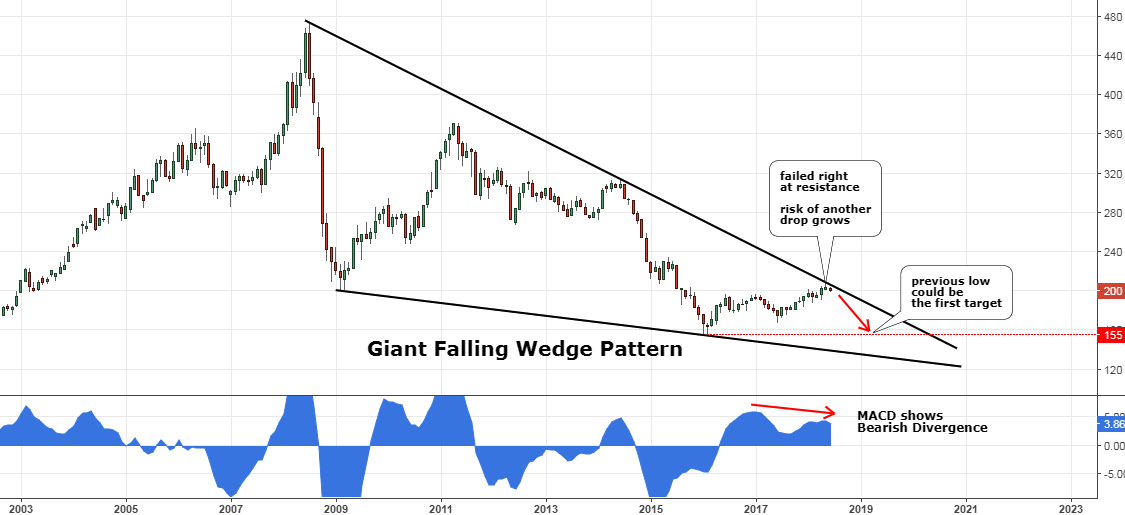
Last August I posted a chart analysis of one particular commodity market index as I spotted an interesting pattern. As time goes by, we can see how my outlook emerged and after almost a year the market reached another crucial milestone or better yet a decision point.

This index is called The Thomson Reuters/CoreCommodity CRB Index (CRB). It is the gauge of the commodities market, which is comprised of 19 commodities: Aluminum, Cocoa, Coffee, Copper, Corn, Cotton, Crude Oil, Gold, Heating Oil, Lean Hogs, Live Cattle, Natural Gas, Nickel, Orange Juice, Silver, Soybeans, Sugar, Unleaded Gas, and Wheat.

So, if you watch commodities market, then the two charts below could be of strong interest to you.

Chart 1. Thomson Reuters/Jefferies CRB Index Monthly: Failed At Resistance

Sell In May And Go Away
Chart courtesy of tradingview.com

Above is an update of the earlier chart. The risk/reward that time ($182) favored a long position as the upside target at the major top ($474) promised to cover risk extensively amid oversold market conditions. Continue reading "Commodities: Sell In May And Go Away?"

Three Politically Focused ETFs

Matt Thalman - INO.com Contributor - ETFs - Politically Focused ETFs


While some investors like to think a company has sole control of their destiny, most wise investors know that outside factors do play a large role in whether a company will succeed or fail, both in the short and long run. Politics may be one of, if not the strongest outside forces that can affect a company’s long-term prospects.

A perfect example of this is playing out right now with the tariff wars raging between the USA and the rest of the world. US steel and aluminum companies seem to be poised to have a decent future as high tariffs are now being placed on imported metal. This is all being sold by the politicians to ensure national security. The idea is that without a steel and aluminum industry, the nation would be at risk if a major war were to break out and there was a shortage of materials.

The tariff’s being placed on imported metals is aimed to help keep US steel and aluminum producers in business. It would appear as of now that this industry and these businesses are certainly benefiting from the Republican’s in the White House.

But, some people believe that’s not the only industry which benefits from the current political leadership. There are currently several Exchange Traded Funds which have been built around industries that may prosper due to the policies being put in place by the current Republican-controlled White House and Congress. Continue reading "Three Politically Focused ETFs"