Global Inflation Prompts Action By Central Banks

Inflation is not limited to the United States. It is a global phenomenon prompting central banks worldwide to take action. Central banks worldwide are quickly moving to a more aggressive monetary policy in an attempt to stave off the spiraling international level of inflation. The president of the Federal Reserve Bank of New York, John Williams, spoke to Bloomberg Television saying that a .50% hike in interest rates is a ‘very reasonable option’ for May.

He also addressed the endgame and timeline to achieve interest rate normalization, saying, “We need to get to a more neutral or normal level of the fed funds rate, though whether that would be the end of the year or exactly when will depend on the data... The Fed should get “real” interest rates, nominal borrowing costs minus expected the inflation rate, back up to a more normal level by next year.” Continue reading "Global Inflation Prompts Action By Central Banks"
Fighting The Eternal Fire

The Federal Reserve’s vaunted independence, which we heard so much about during the Trump Administration but very little so far under President Biden, will be put to the test this year as it battles 1980s-style inflation during an election year. Will the Fed fight vigorously to fight inflation that now totals an annualized 8.5% according to the March consumer price index, as it now insists it will, or will it suddenly wimp out just before November 8 if it senses that raising interest rates to the point of recession is a cure worse than the inflation disease?

Needless to say, the Fed is just as guilty as the fiscal authorities for creating runaway inflation, no, we can only blame some of this on Vladimir Putin. Since the 2008 global financial crisis, with just a couple of short, minor pauses, the Fed has kept interest rates artificially low and pumped trillions of dollars into the economy long after any emergency justified it doing so. Now, finally, the Fed has come to the realization that monetary accommodation has gone on too far and too long and is now ready to tap on the brakes. It’s already begun the interest rate raising process and will soon start reducing “at a rapid pace” its $9 trillion balance sheet, according to Fed Vice Chair designate and current Fed Governor Lael Brainard.

“It is of paramount importance to get inflation down,” the formerly dovish Brainard said recently at a Minneapolis Fed conference. Continue reading "Fighting The Eternal Fire"

End Of The Pandemic Or The Beginning Of A Recession?

“The following is an excerpt from Tim Snyder’s “Weekly Quick Facts” newsletter. Tim is an accomplished economist with a deep understanding of applied economics in energy. We encourage you to visit Matador Economics and learn more about Tim. While there, you can sign up for his completely free Daily Energy Briefs and Weekly Quick Facts newsletters.”

What is it about the truth that scares people?

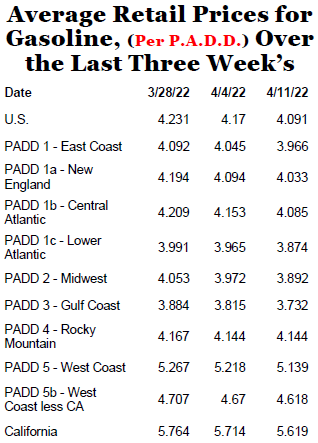
Gasoline prices this week took a bit of a respite after several weeks of steep climbs. The relief at the pump is palatable and very much appreciated by those on fixed budgets. But the fall from record highs, may not continue if inflation continues to run unchecked.

Diesel prices fell as word of another variant of Covid-19 seems to be making the rounds. The Chinese Government shut in 26 million people this week, sending a signal that demand for the products may falter over the next couple of weeks.

Gas Prices - Recession

Are we at the end of the pandemic or the beginning of a recession? Continue reading "End Of The Pandemic Or The Beginning Of A Recession?"

ETFs To Invest In When Interest Rates Are Rising

In March, the Federal Reserve decided to raise interest rates for the first time since the Covid-19 Pandemic began. The timing of the interest rate hike was needed as inflation has grown during the pandemic for many reasons. Some believe inflation is on the brink of running out of control, which has Federal Reserve members, economists, and those who work in the financial industry all making a case for more aggressive interest rate increases in the future.

With inflation above 7%, not many people would argue that interest rates need to increase in order to slow and eventually lower the inflation rate. Higher interest rates lower the number of large purchases consumers will make; think cars and homes. But high-interest rates do a similar thing to businesses; it reduces the amount they are willing to spend or reinvest in their company. These two factors together typically end up pushing the economy into a recession of some sort once and if interest rates slow the economy too much.

Tampering with interest rates is a double edge sword; you go too far in one direction, and inflation grows; too far in the other direction, and you send the economy into a recession. Unfortunately, though, we are at a point where the Fed almost has to raise rates in order to slow inflation to a more reasonable level. Continue reading "ETFs To Invest In When Interest Rates Are Rising"

U.S. Dollar To Hit $121; Crude Oil To Hit $176?

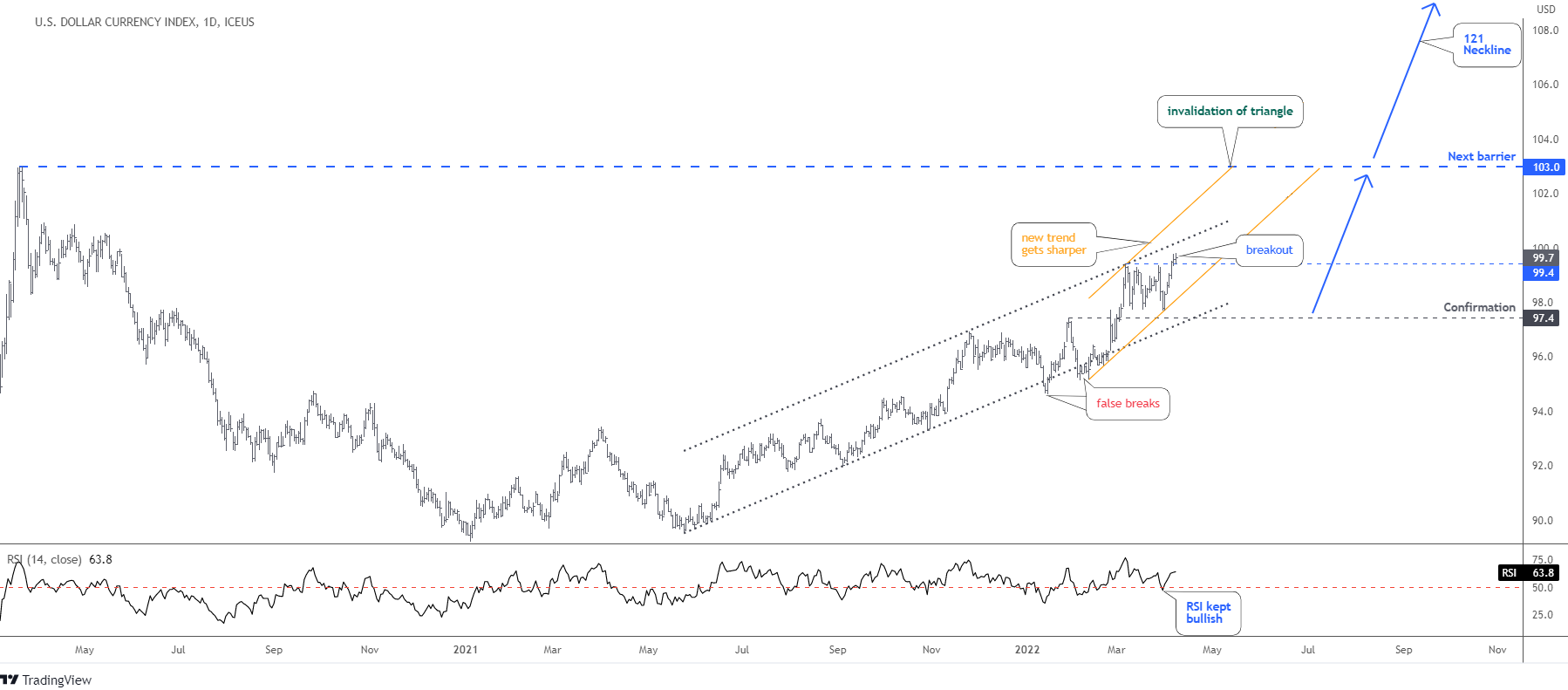
It turned out that the dollar weakness we observed in February was about to be over right after the earlier update. I thought we would see more downside for the DX in the area between 94.4 and 92.5 (Fibonacci retracement levels) before the rally resumes, and most readers supported that idea. However, the rally started immediately.

The inflationary pressure underpins the dollar, as the Fed has turned strongly hawkish on the interest rate and tapering. Let us check out the updated daily chart below.

Dollar

In my previous post, we saw the DX piercing down the dotted gray uptrend. Those punctures turned out to be false breaks, as fallouts of the channel were temporary, and the move up resumed overcoming above the preset confirmation level of 97.4. Continue reading "U.S. Dollar To Hit $121; Crude Oil To Hit $176?"