Market-Cap-Weighted Investing Has Been Good, But Will It Last?

The major US, and well world indexes, for that matter, are all market capitalization-weighted indexes. This means the index will own a particular amount of one company or another based on that company’s market cap. On the surface, this sounds fine. And decades ago, when the indexes were really starting, this method worked just fine. It was a fast, easy, and simple way for investors and money managers to put together the index.

But fast forward to today and beyond, and market cap indexes may not be the best solution due to the simple issue of the index being too heavily weighted. In a past article, I highlighted how the top 5 companies in the S&P 500 represented 23% of the index. That means 5 companies represent almost a quarter of what an index that supposedly tracks 500 companies is doing.

However, over the past few years, especially the past year, these top five companies, Apple (AAPL), Microsoft (MSFT), Amazon.com (AMZN), Facebook (FB), and Alphabet (GOOG), have performed incredibly well. So, investors who have ridden these market-cap-weighted indexes higher for a few years are very happy and have done very well.

However, there is always a downside risk, and with these market-cap-weighted indexes being so heavily weighted to the top 5 or 10 stocks, the risk is much higher than most investors fully understand. Continue reading "Market-Cap-Weighted Investing Has Been Good, But Will It Last?"

What Is Proof Of Work And Proof Of Stake?

One of the best features of cryptocurrency is that there is no need for a central authority like a bank to sign off on business transactions. So I can do business with someone without a massive bank or other financial behemoth looking over my shoulder. And so long as the terms of the transactions are fulfilled – whether it’s buying something with Bitcoin and executing a contract with Ethereum – the deal is done.

Driving this whole process is a network of computers with multiple copies of all the transactions – including the one I just mentioned. When everyone on the blockchain verifies these transactions, the transaction is added as a new block. The process is complete until the next transaction comes around the corner.

But here’s the rub: When I first go into crypto, I knew that people would do all this work on the blockchain because they would get paid in coins that made up the blockchain. But if you have a ton of people all doing the same work, who decides which person gets paid?

Well, there’s just two ways of getting paid if you work on a blockchain: Proof of Work and Proof of Stake. And here’s the nitty-gritty on both.

Why Do We Need Proof of Work or Proof of Stake?

The answer is pretty straightforward: To manage the issuance of new coins and to make sure people don’t cheat. Continue reading "What Is Proof Of Work And Proof Of Stake?"

Bitcoin and Gold Update: What's Next?

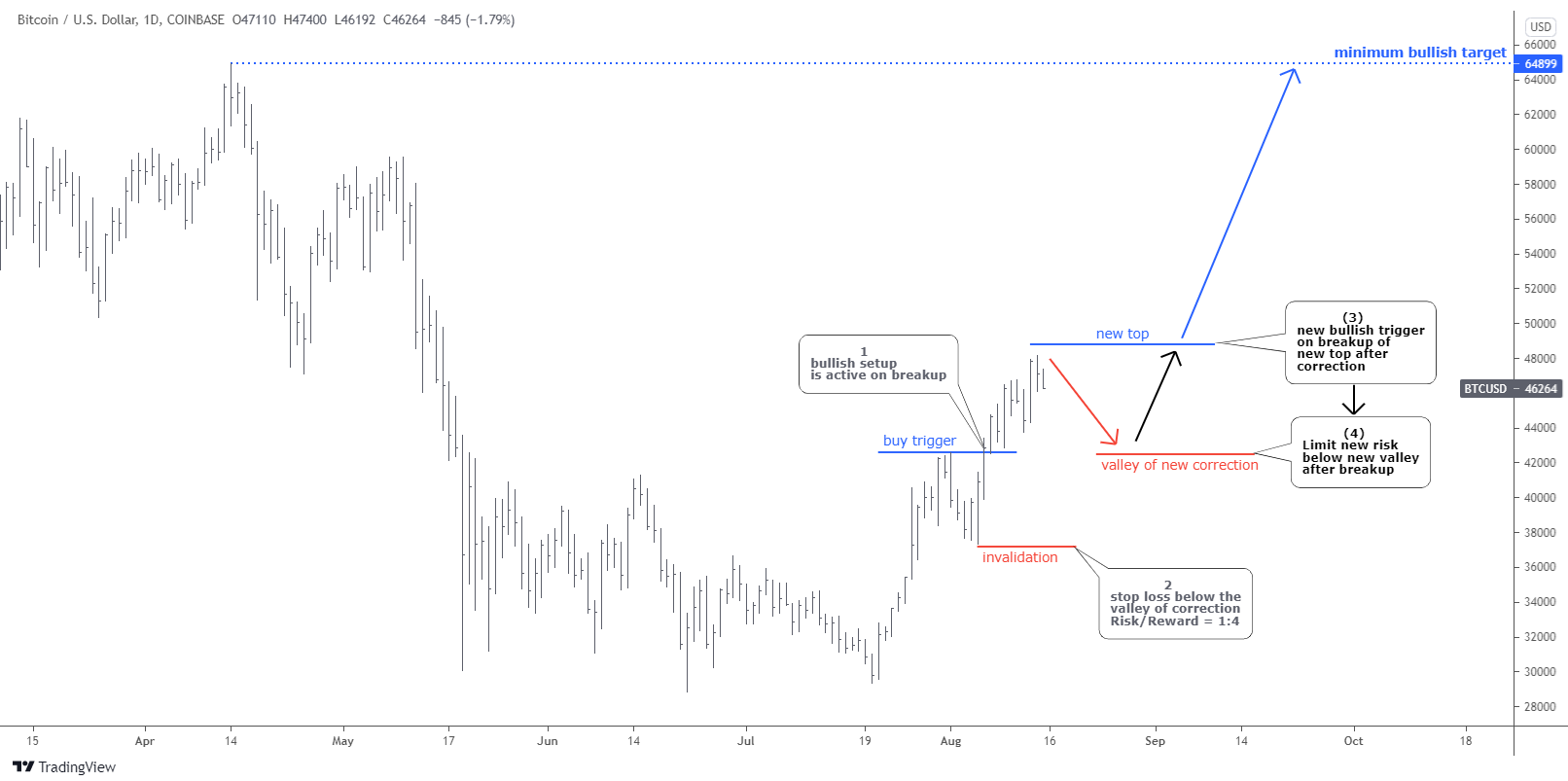
Bitcoin triggered the new buy setup posted last week.

Most readers confirmed that they see the new bullish opportunity in Bitcoin, and the largest part were ready to add or enter the new trade.

Bitcoin Daily Chart

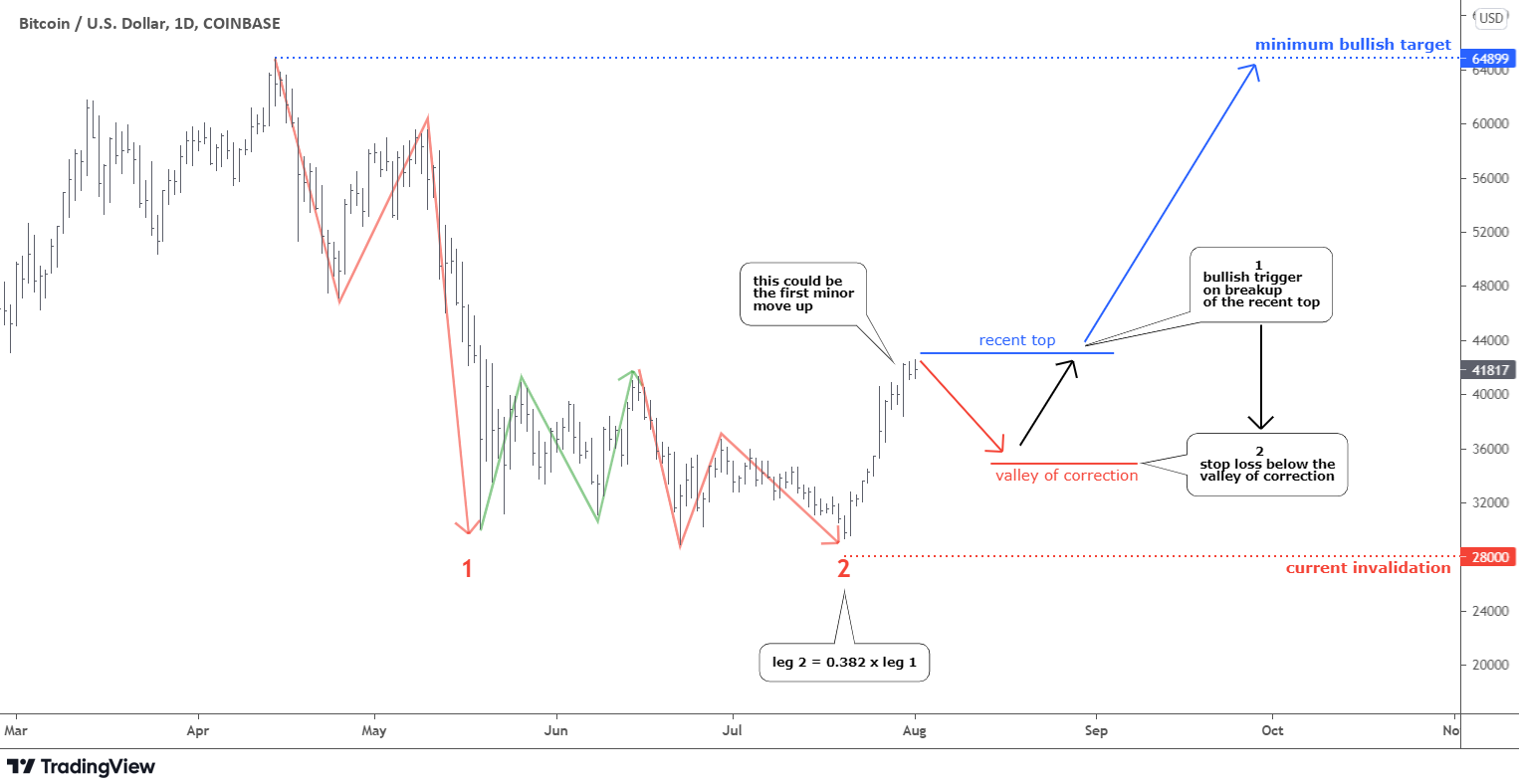
The new buy setup repeated the first trade setup as the setback was not deep again as it only reached the same 38.2% Fibonacci retracement level.

The Friday brought the expected trigger above the previous Saturday’s top of $48,150. The setup is active now and should limit risk below the valley of correction to around $43,900. The risk/reward is good at 1:4, with the same target at the all-time high of $64,899. Continue reading "Bitcoin and Gold Update: What's Next?"

Weekly Stock Market Forecast

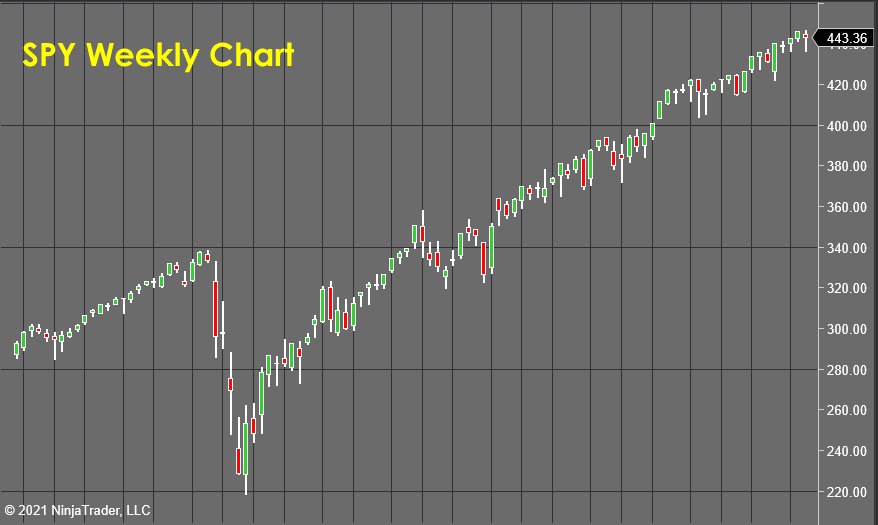
This week we have a stock market forecast for the week of 8/22/21 from our friend Bo Yoder of the Market Forecasting Academy. Be sure to leave a comment and let us know what you think!

The S&P 500 (SPY)

SPY Weekly Chart - Stock Market Forecast

Another week of drifting from the markets as we work our way through the August doldrums.

The market’s action is almost like if you took the biggest breath possible and began to hum one note for as long as you could. Of course, it would be hard to predict just how long you could sustain that note, yet we would both know that at some point, you would run out of air and have to take a big breath in... Continue reading "Weekly Stock Market Forecast"

Fintech Duopoly: Square and PayPal

Fintech has been a multi-year growth story that’s still in its early innings, with Square (SQ) and PayPal (PYPL) leading the pack. Square recently announced a $29 billion, all-stock deal to buy Afterpay, a buy now and pay later platform. Square’s acquisition highlights consumers circumventing traditional credit, especially younger buyers, for installment loans. Payment players and financial technology, notably PayPal, also offer their own version of buy now and pay later. Both Square and PayPal enable businesses with a point of sale, analytics, peer-to-peer payments via Venmo (PayPal) and Cash App (Square), small business lending, cryptocurrency transactions, and support traditional credit card integrations into their platforms. Square and PayPal offer end-to-end financial solutions for businesses and consumers while powering the next generation of financial technology. These financial technology companies are creating additional revenue verticals while addressing unmet needs in the financial services space. Both Square and PayPal may offer long-term growth at reasonable valuations when factoring in their end markets are current growth rates.

Latest Earnings and Growth

The recent earnings reports by Square and PayPal highlight the massive trends and growth trends in the financial technology space. Square’s profit increased 91% from a year ago, which marked a record quarterly growth rate for the payments company. Cash App profit was up 94%, while seller jumped 85% from a year ago. Net revenue excluding bitcoin came in at $1.96 billion for the quarter, an 87% rise year-over-year. PayPal added 11.4 million net new active accounts for a total of 403 million active accounts. Revenue grew 19% year-over-year. Total payment volume grew 40% to $311 billion, while the Venmo app, which began supporting cryptocurrency services in April, saw payment volume grow 58% to $58 billion. Again, these companies are growing rapidly and clearly seeing widespread adoption across their financial solutions with cryptocurrency and buy now-pay later, serving as long-term catalysts. Continue reading "Fintech Duopoly: Square and PayPal"