Platinum And Palladium Update

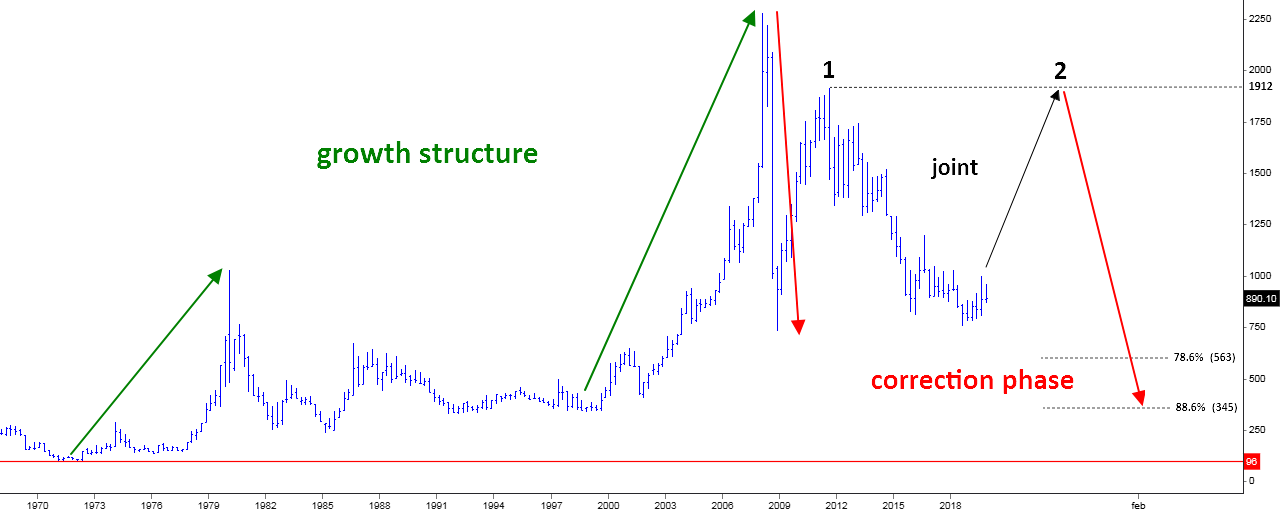
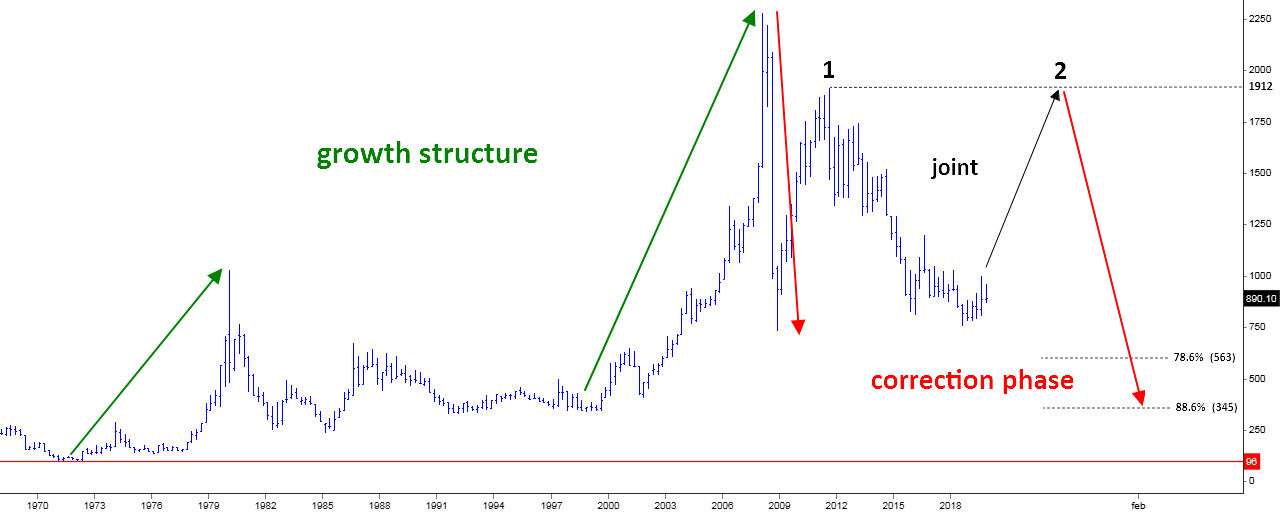
I put the platinum first as it has a clearer structure. The big map has remained unchanged since 2019; I put it down below to brush up.

Platinum

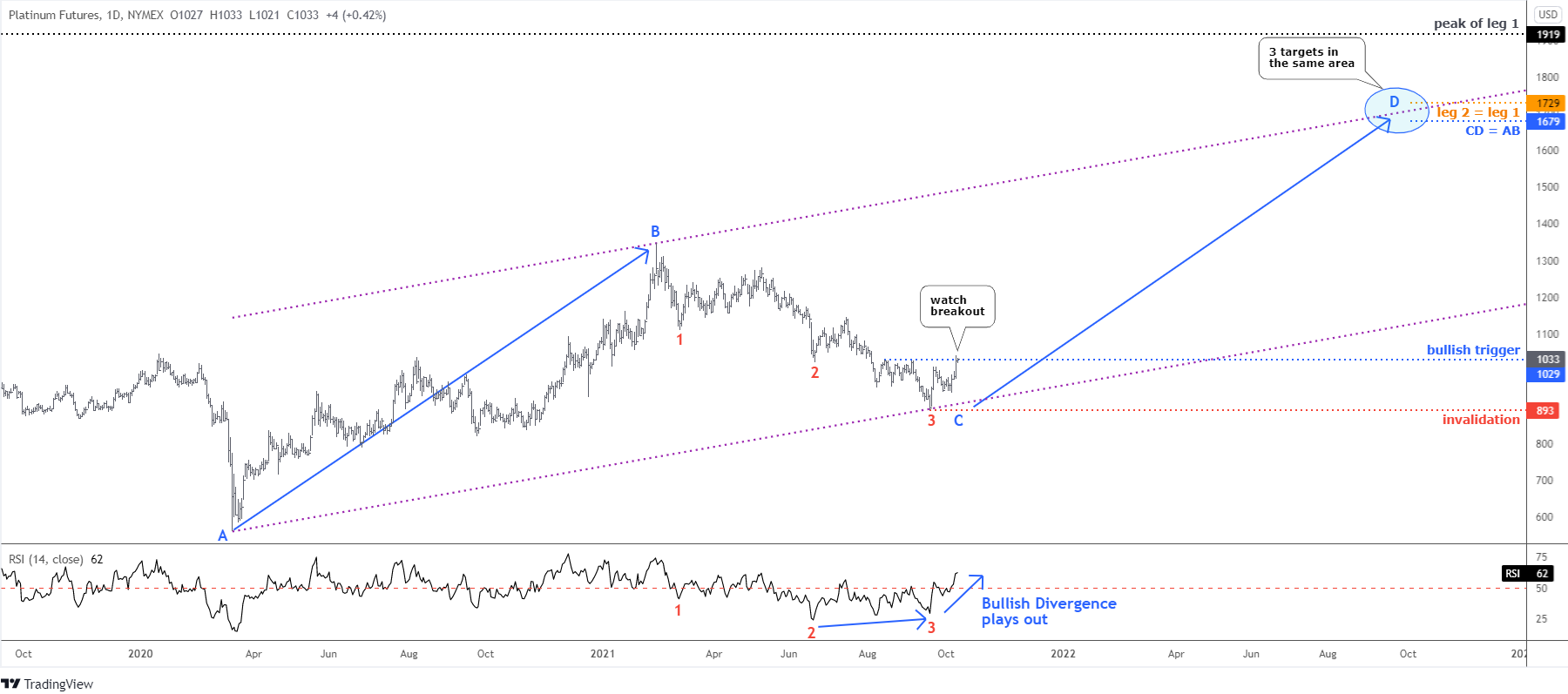
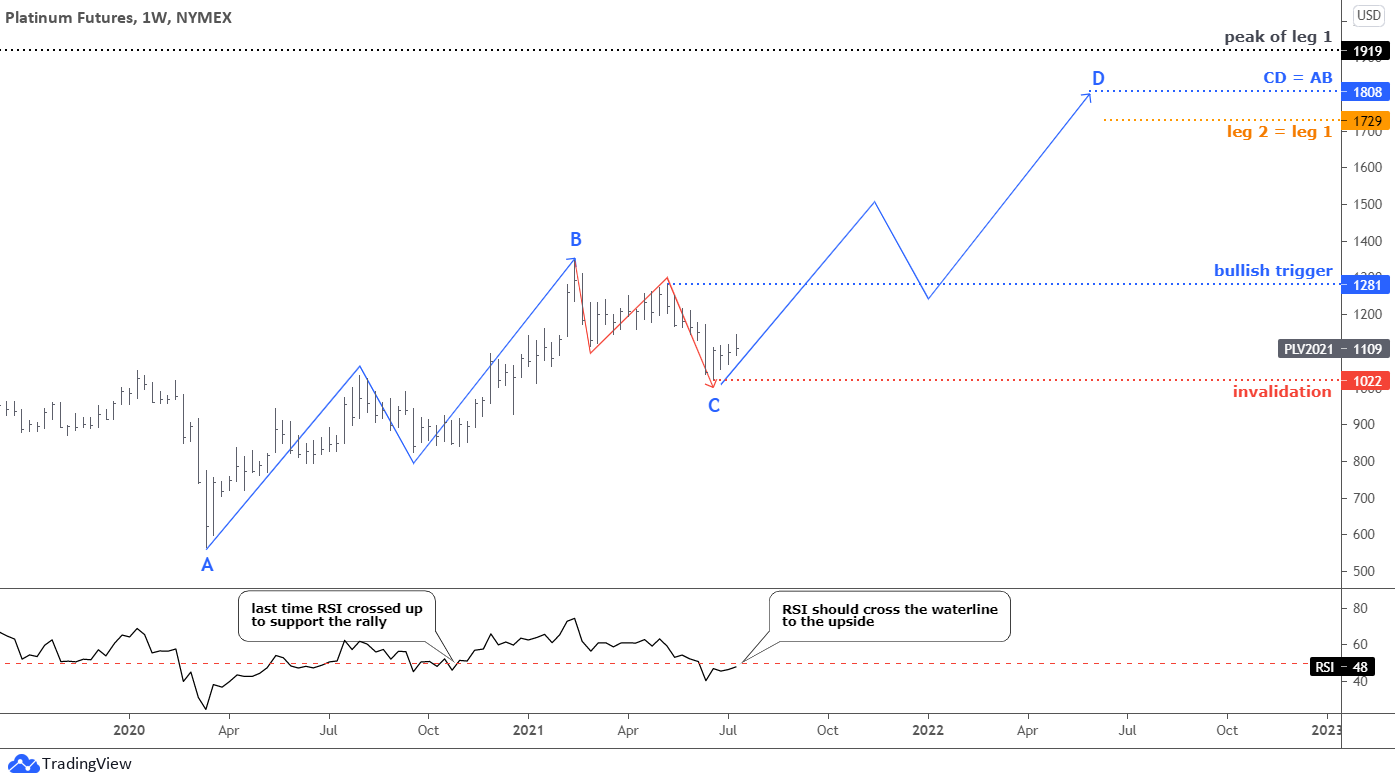
We are in leg 2 (black) with a completed AB part (next chart). I expected the CD part to start earlier. However, the bullish trigger was left untouched and the market collapsed further down.

Platinum

The third red leg down has hammered the platinum futures price below $1,000 handle to hit the valley in $893. It is amazing how symmetry works here, as all three legs are almost equal to each other. It is a good sign for the platinum as it suffered a lot. Continue reading "Platinum And Palladium Update"

Weekly Stock Market Forecast

This week we have a stock market forecast for the week of 10/10/21 from our friend Bo Yoder of the Market Forecasting Academy. Be sure to leave a comment and let us know what you think!

The S&P 500 (SPY)

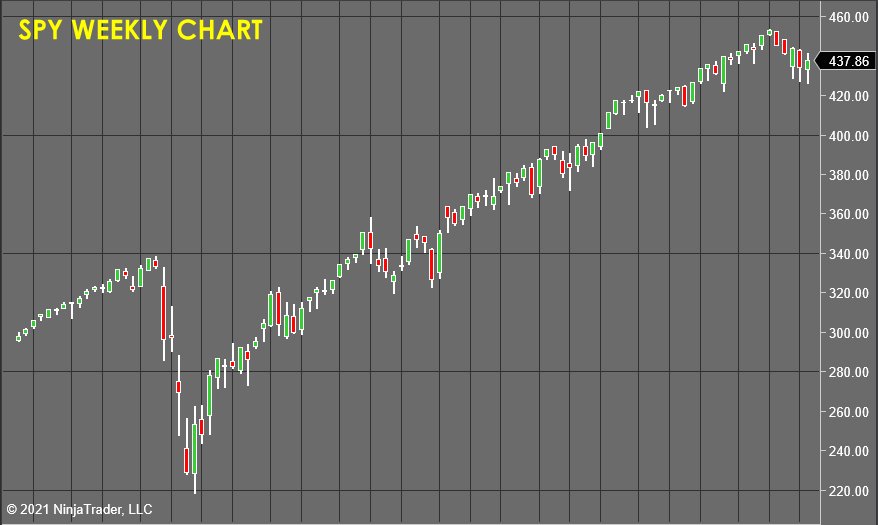
SPY Weekly Chart - Stock Market Forecast

My life got medically hijacked a few weeks ago when our daughter decided to make her appearance a few weeks early! We spent some time with her in hospital, but all is well that ends well, and she's happy, healthy, and home!

It's times like these that really make me grateful that I have been blessed to live the life of an independent trader, free to dodge and weave and adapt to the curve balls life throws at you.

I haven't looked at screens for a while, so I come to the charts with fresh eyes. Here is what I'm seeing and can forecast for the week to come. Continue reading "Weekly Stock Market Forecast"

Real Estate ETFs React To Rising Mortgage Rates - Part 2

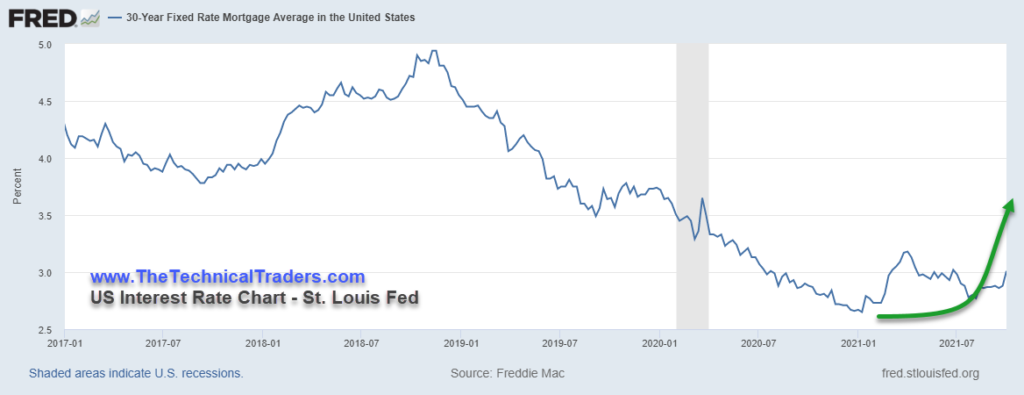
As the Real Estate market shifts away from super-low interest rates and skyrocketing home prices throughout the COVID-19 crisis, we are starting to see the Real Estate ETFs weaken in trend and start to move lower. The recent rising Mortgage Rates will likely continue to weaken sales trends and push home prices a bit lower over the next few months. The Real Estate ETF, IYR, is already reflecting a roughly 10% decline in valuation since early September 2021.

In the first part of this research article, I shared a historical chart of the US Average Mortgage rate and some data suggesting the average US consumer is somewhat bound to certain home price constraints based on Average Income. Typically, mortgage payments should stay below 50% of the borrower’s total take-home income. Depending on the borrower and the home price, many US borrowers may already be priced out of the market – even with 3.25% interest rates.

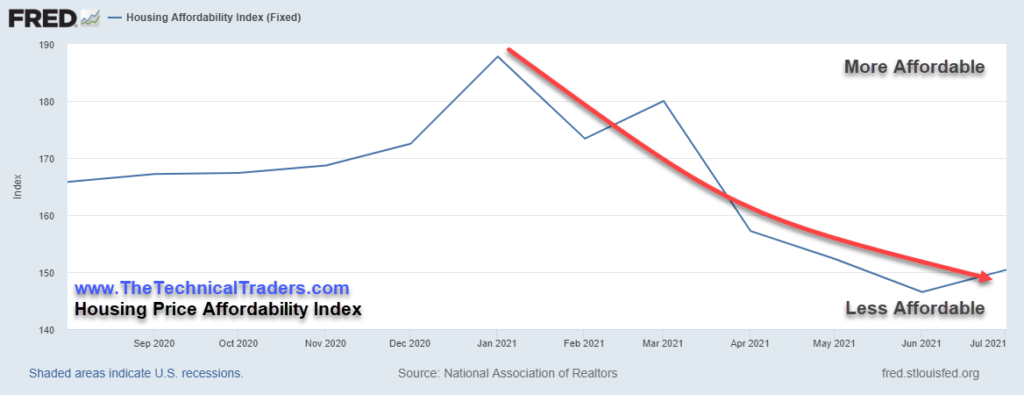
Peak Home Price Affordability Was Reached In Early 2021

Peak affordability appears to have peaked in December 2020 & January 2021 – just after the COVID-19 crisis. This likely correlates to the lower interest rates, at one point below 2% in most of the US, for home buyers while home prices were 20% to 40% lower than they currently are in most areas.

Housing - Home Sales

(Source)

Case/Shiller National Home Price Index Has Skyrocketed 30% Higher Since May 2020

A great measure of the National Average Home Price is the Case/Shiller US National Home Price Average Index. From the chart below, you can see the almost parabolic rise in home prices after the March 2020 COVID-19 event. This incredible rally represents a 30%+ increase in home average US home prices in a little over 13 months. Continue reading "Real Estate ETFs React To Rising Mortgage Rates - Part 2"

Real Estate ETFs React To Rising Mortgage Rates - Part 1

US Mortgage Rates have risen from levels near 2% to 2.25% earlier in 2021 to levels now above 3%. This increase in the cost of borrowing money for home purchases has a downward effect on home prices and sales. The affordability of homes is directly related to the sales price and the cost of the mortgage to secure the purchase of the home. As interest rates rise, home affordability becomes less attractive and feasible for many potential buyers, and home prices start to fall in an attempt to allow a quicker sale.

The Making of Another US/Global Housing Crisis

The easiest way to think about this is to consider the ability of buyers to secure and satisfy mortgage payments for homes. The more expensive the sales price of the home and the interest rate of the loan is, the more likely the affordability of the home is going to be perceived as undesirable.

As concerns related to the US economy, and the indication by the US Federal Reserve that rates will likely start to increase before the end of 2021 or very early in 2022, mortgage rates have already increased by nearly 45% over the past 60 days. A $500k home would have cost about $2500 a month at a 2.25% mortgage rate (including property taxes, homeowners insurance, mortgage insurance, and principal & interest). That same $500k home costs more than $2700 a month at a 3.25% interest rate (including all fees and costs).

US Interest Rate Chart - Home Buying

Over the lifetime of the loan, the total costs of buying the $500k home have now increased by more than $70k for the buyer. If rates rise to 4.25%, the new monthly cost of that same $500k home rises to nearly $3000 per month. Raising the total cost of buying that $500k home by more than $180k over the lifetime of the loan for the new buyer. Continue reading "Real Estate ETFs React To Rising Mortgage Rates - Part 1"

Ominous Inflationary Signs Evident

Inflation Revving Up

Earnings season is getting underway, and thus far Costco (COST), Federal Express (FDX), and Nike (NKE) have warned that inflation is real and is bound to hit consumers as the holidays approach. Costco, Federal Express, and Nike are seeing rising shipping costs and supply chain disruptions that persist and should continue through the upcoming holiday season. In particular, the cost to ship containers overseas has skyrocketed over the past few months. These rising inflation expectations and the realization of these inflationary pressured could cause the Federal Reserve to change policy course sooner rather than later. It’s going to be a tug-a-war between inflation, employment, Washington wrangling, and the delta variant backdrop. CPI reports will become more significant as these readings are used to identify periods of inflation. The recent CPI readings result in a much stronger influence on the Federal Reserve’s monetary policies hence the recent taper guidance.

Real World Inflationary Commentary

Supply chain disruptions, specifically in the shipping channels, have led to rising freight costs that have escalated shipping costs dramatically. The cost to ship containers overseas has soared in recent months. A standard 40-foot container from Shanghai to New York costs about $2,000 a year and a half ago pre-pandemic. Now, it runs some $16,000, per Bank of America.

Costco CFO Richard Galanti called freight costs “permanent inflationary items” and said those increases combine with things that are “somewhat permanent” to drive up pressure. They include freight and higher labor costs, rising demand for transportation and products, shortages in computer chips, oils, and chemicals, and higher commodity prices. Continue reading "Ominous Inflationary Signs Evident"