Gold Resilient Amid Market Sentiment Reversal

This week the Federal Reserve addressed revisions to its current monetary policy in its attempt to reduce the current levels of inflation to an acceptable target. The statement released after the FOMC meeting, coupled with Chairman Powell’s press conference, resulted in extreme volatility in many financial sectors.

Market participants witnessed one of the strongest knee-jerk reactions and complete market sentiment reversal over 24 hours. The initial market sentiment was extremely short-lived as it was followed by a complete turnaround from the initial reaction the following trading day.

The release of the Federal Reserve’s FOMC statement, coupled with Chairman Powell’s press conference, resulted in a major rally in U.S. equities. The S&P 500 gained almost 3%, the largest daily gain in two years. Equities overall experienced the best Fed-day return since 2011. It significantly impacted gold, moving the precious yellow metal higher. Concurrently, the dollar had a significant decline losing almost 1%, and yields on U.S. Treasuries were also significantly declining. Continue reading "Gold Resilient Amid Market Sentiment Reversal"

ISM Hints At Forward Deceleration

As a former manufacturing guy, I am well aware of how monetary policy and the state of the US dollar affects US manufacturers. But I have not been that guy for so long now that I tend not to look at it as closely anymore. But the current time seems appropriate for a review of the manufacturing sector.

I actually used to look down upon the ‘services’ economy as something almost artificial, given that the US had been exporting its manufacturing base (and thus, much of its productivity) for decades and replacing normal economic cycles with monetary chicanery (like the Fed’s ability to regulate the economy through interest rate manipulation) in order to keep the consumerist racket going.

The latest round of monetary manipulation (the post-2020 cycle was driven by the Fed’s latest inflationary operation) is being addressed by the bond market, which is forcing the Fed to raise interest rates. The anticipation of which is a primary driver of the US dollar, which has been diverging inflation for a year. USD is on a heater now much like it was in 2014 when NFTRH caught that bottom in real time amid the post-2011 Goldilocks phase (in the US, while deflationary pressure persisted globally).

USD has retraced 62% of its decline into the 2007 low and is now at a long-term resistance area. Will it ‘sell the news’ of a hawkish Fed just as it bought the news (in 2021, which we also nailed in real time) of terrible inflation permeating the macro? That is for another article, as this one is about the ISM. For the purposes of this article, suffice it to say that a strong USD impairs US manufacturing exports. Continue reading "ISM Hints At Forward Deceleration"

What Do The Macros Tell Us About The Market?

“The following is an excerpt from Tim Snyder’s “Weekly Quick Facts” newsletter. Tim is an accomplished economist with a deep understanding of applied economics in energy. We encourage you to visit Matador Economics and learn more about Tim. While there, you can sign up for his completely free Daily Energy Briefs and Weekly Quick Facts newsletters.”

When the macros make the market in energy and stay way out ahead of the U.S. Fed!

This week’s attention has been almost entirely on the U.S. Federal Reserve and raising the Discount Rate by 50 basis points. The Fed’s charge is to bring inflation back in line with the goals of a stable market. The problem is this, when the actions of the FED are either too weak or too late, when they finally do act, it may be ill-timed at the very least, if not outright wrong.

Over the last few weeks, we have seen the GDP turn negative at -1.4%. We saw the Consumer Price Index come in at an 8.5% rate, year over year, and we got the Producer Price Index came in at a 40-year high of +11.2%.

These macros alone showed the markets just how far U.S. inflation had gotten out of control. No matter how much the Fed, or the Treasury Secretary, said the word “Transitory,” they just couldn’t fool markets back into line. It takes action. The macros tell us the FED action is “too little and too late.” Continue reading "What Do The Macros Tell Us About The Market?"

3 Gold Miners Trading At Dirt-Cheap Valuations

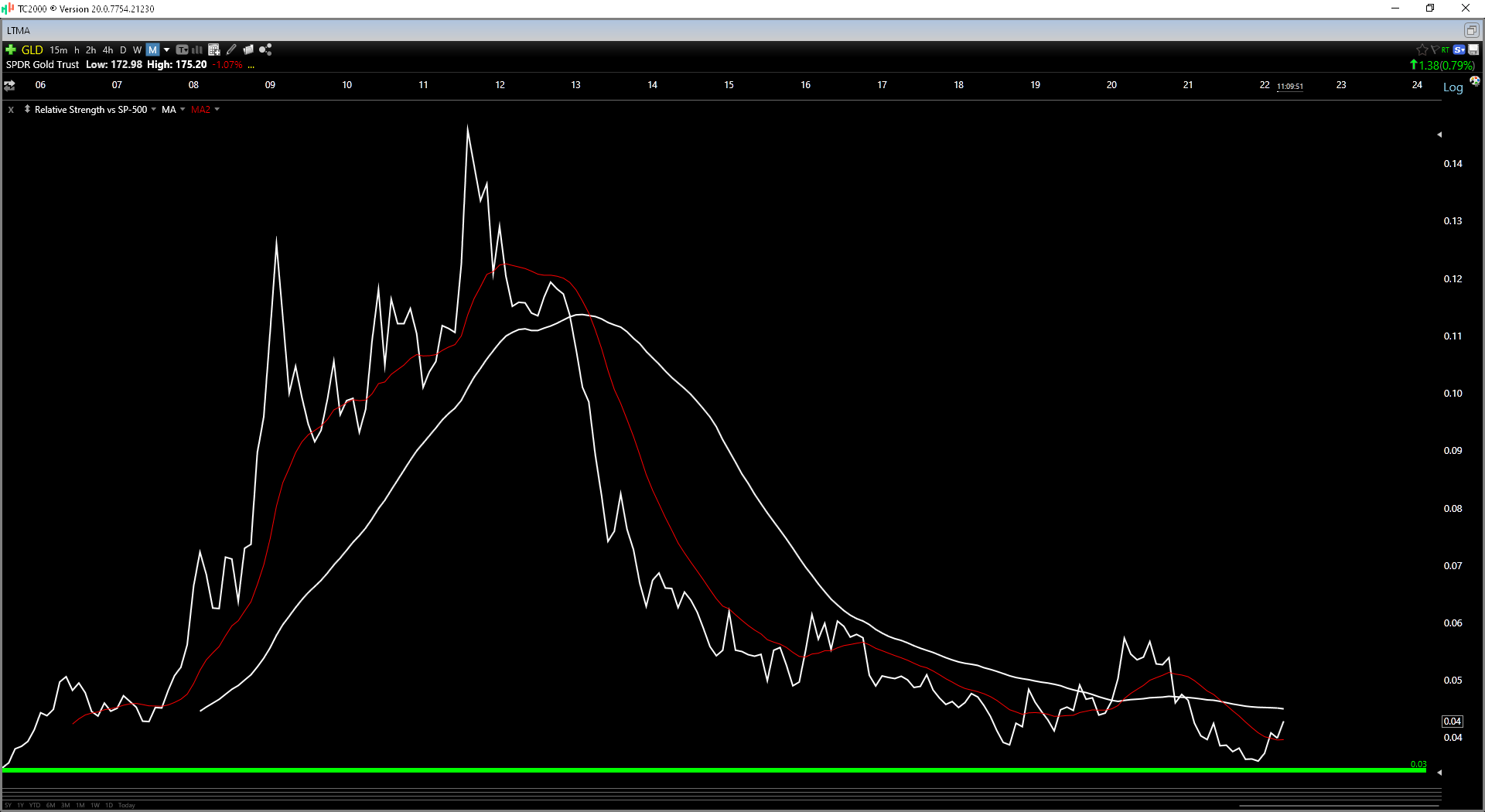
It's been a volatile start to the year for the major market averages, but one sector that's managed to hold up well among the carnage is the Gold Miners Index (GDX). In fact, the index is up 10% year-to-date on the back of higher gold prices. While some investors might fear that they've already missed the move and it's too late to chase, it's important to note that gold has begun to outperform the S&P 500 (SPY) after a multi-year downtrend, which typically suggests we're in the early innings of the move for the GDX. In addition, while a few names are outside of low-risk buy zones, several are dirt-cheap, even after the sharp rally in Q1. Let's take a closer look below:

GLD/SPX Chart

Source: TC2000.com

When it comes to getting exposure to gold, the Gold Miners Index is typically the vehicle of choice for investors. However, the issue with the GDX is that it's made up of more than 50 names, with many having weaker balance sheets, a poor track record operationally, and razor-thin margins. Unfortunately, the latter has been exacerbated by inflationary pressures. Therefore, by owning the index, one is diluting their returns with the laggards. For this reason, I prefer playing the sector by owning the highest-quality names when they go on sale. Continue reading "3 Gold Miners Trading At Dirt-Cheap Valuations"

Dollar Index Hits Your Target And More

Three weeks ago, I shared the chart of the U.S. Dollar Index (DX) with a bullish outlook.

You supported the idea with the most votes given to the conservative target of $103 located at the peak of Y2020. Your winning vote played out last Wednesday, the 27th of April. Kudos to all of you.

It is time to dust off the big chart again to update on further prospects.
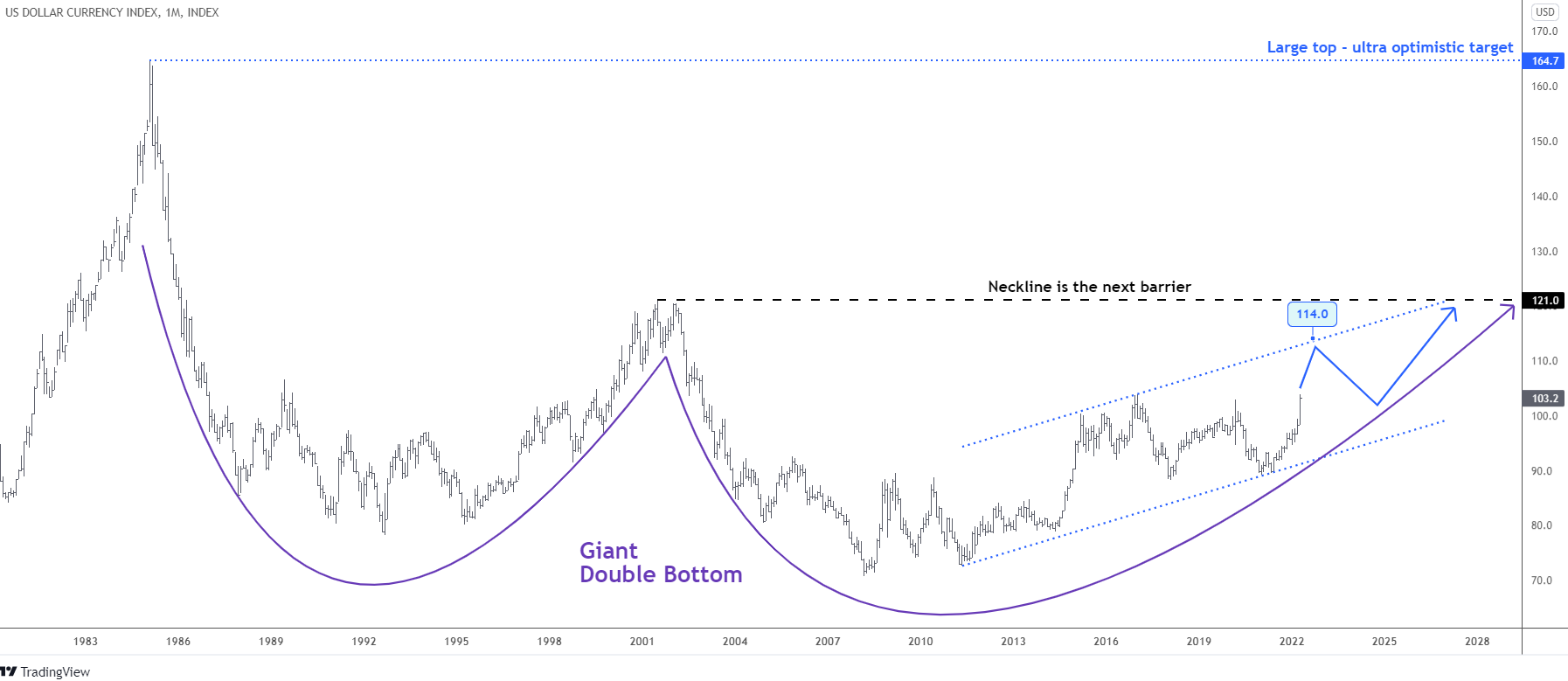
Dollar Monthly Chart

The green triangular scenario has been eliminated as the price surpassed the last year’s peak of $103. The least favored blue path is the primary plan now. I turned the blue arrow into a blue zigzag as the price could take a break after hitting the upside of the blue dotted trend channel around $114.

The next barrier (black) of the Neckline (Giant Double Bottom pattern) is located at $121. It is that very target I was calling for in the title of the previous post.

It is too early to talk about the plan in case the Neckline is broken, although we have no other large barriers beyond, except the all-time high at the peak of the distant 1985 of $164.7. It would be an ultra-optimistic target with the total dominance of the dollar across the globe.

Where do you think the dollar index will stop?

View Results

Loading ... Loading ...

I want to show you one chart below that could shed light on why the dollar could rise further.
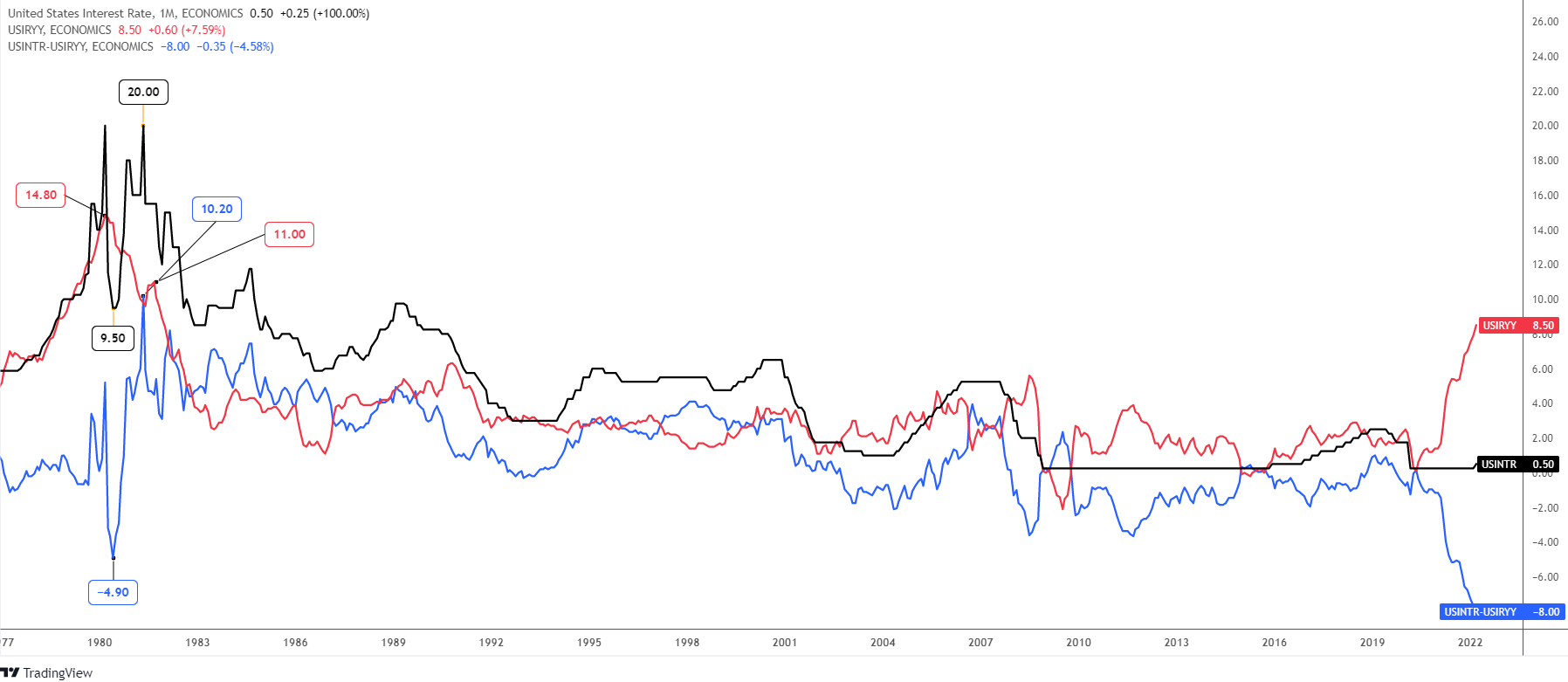
Historic Interest Rate Chart

There are three lines in the chart above that represent the U.S. interest rate (black), U.S. inflation rate YoY (red), and the U.S. real interest rate (blue). It starts from 1977, and for the considered period, the current real interest rate has the most negative reading of -8%. Thus, the Fed has been forced to admit that this raging inflation is not transitory, and it should respond appropriately to take the rising prices under control. This week, the market expects a 50 basis point hike from the Fed; this would double the interest rate to 1.00%.

In 1980, the real interest rate had dived deep into a negative area to hit the valley -4.90% amid the strong inflation above 14% and the falling interest rate (9.50%). This triggered the fast-paced tightening of the monetary policy as the Fed rate more than doubled to hit the earlier top of 20% in just one year. The inflation quickly dropped to single-digit numbers under such severe pressure. Indeed, the real interest rate made a V-turn accordingly to match even with the inflation rate of around 10%.

If we take history as a sample, the Fed could take the interest rate much higher beyond the most hawkish expectations. The simple calculation shows that the Fed rate topped at the ratio of 1.35 to the peak inflation rate (20/14.8). Applying this math to the current situation, we should multiply 1.35 by 8.5% of the inflation rate. Then the Fed should hike up to 11.5%, an unbelievable number! Although, it will not update the all-time high.

The time lag between the peaked inflation and the first hike was almost a half year in the past. This time, the Fed took the first step almost immediately if we take the March inflation reading as the peak. It could change the size of the tightening, as the speed really matters.

Do you think the Fed rate could hit 11.5%?

View Results

Loading ... Loading ...

The higher the real interest rate, the more attractive the currency is. The hawkish Fed could spur even stronger demand for the U.S. dollar.

I am eager to see your opinion in the comments below, as it has enriched our view many times before.

Intelligent trades!

Aibek Burabayev
INO.com Contributor, Metals

Disclosure: This contributor has no positions in any stocks mentioned in this article. This article is the opinion of the contributor themselves. The above is a matter of opinion provided for general information purposes only and is not intended as investment advice. This contributor is not receiving compensation (other than from INO.com) for their opinion.